|
|
|
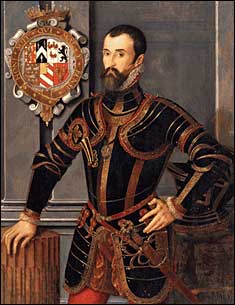

SIR WILLIAM HERBERT, first Earl of Pembroke of the second creation (1501?-1570), was eldest son of Sir Richard Herbert
of Ewyas, Herefordshire, by his wife Margaret, daughter of Sir Matthew Cradock of Swansea. Sir Richard, who lies buried under
a fine canopied tomb in Abergavenny Church, was illegitimate son of William Herbert, Earl of Pembroke of the first creation (d. 1469),
by a mistress, Maud, daughter of Adam ap Howell Graunt. According to the statement on a portrait at Wilton that he was
sixty-six years old in 1567, William was born in 1501.
As a youth he seems to have entered the service of his kinsman Charles Somerset, Earl of Worcester,
and soon attracted notice at court. He became a gentleman-pensioner in 1520 and esquire of the body to the king. Aubrey in his
'Lives' states that he was 'a mad young fighting fellow.' On Midsummer-day 1527, Aubrey continues, he took part in an affray
at Bristol between some Welshmen and the watchmen, and a few days later killed a mercer named Vaughan on account of 'a want
of some respect in compliment.' Thereupon he is said to have fled to France; to have joined the French army; and to have
distinguished himself so conspicuously by his courage and wit that the French king wrote in his
favour to Henry VIII. He soon returned home, and married Anne, younger
daughter of Sir Thomas Parr, and sister of Catherine Parr,
who became, on 12 July 1543, Henry VIII's sixth queen.
Thenceforth Herbert's place in the royal favour was assured, and royal grants soon made him a man of fortune. In 1542 and 1544 he
and his wife received the rich estates belonging to the dissolved
abbey of Wilton, Wiltshire. He destroyed the monastic buildings and built a magnificent mansion. In 1543 he was knighted, and on 24
Jan. 1548-4 was appointed captain of the town and castle of Aberystwith. On 27 April 1546 he became gentleman of the privy chamber,
and was granted the keepership of Barnard's Castle on the banks of the Thames, near the spot now occupied by St. Paul's Wharf. At the
same time he was appointed steward of much royal property in the west of England, and became owner of Cardiff Castle and of much
additional land in Wales. The manor of Hendon, Middlesex, also fell to him. Baynard's Castle was thenceforth his London residence, and
remained in the possession of his descendants. Herbert was an executor of Henry VIII's
will, and the king bequeathed to him £300, and nominated him one of Edward VI's new privy council
of twelve. Herbert and Sir Anthony Denny rode in the chariot carrying the coffin at Henry VIII's funeral.
Herbert supported the election of Seymour as protector on
Edward VI's accession. On 10 July 1547 the young king granted
him the manors of North Newton and Hulcot, and in the following year he was made master of the horse and a knight of the Garter.
When disturbances broke out in 1549 in the west of England, he raised a force of two thousand Welshmen from his Welsh estates, and
with ">Lord Russell relieved Exeter, which was threatened by an irruption of Cornishmen. His own park
at Wilton had been invaded earlier, and he had dealt severely with the rioters. To repay him the heavy expenses of the campaign, the
council allowed him to take the profits of minting two thousand pounds of bullion silver, which are said to have amounted to 6,709l. 19s.*
Meanwhile the quarrel between Protector Somerset and his rival
Warwick had come to an open rupture. Both were anxious to
gain Herbert's support. Somerset entreated him to bring his Welsh followers to his aid in London, while Warwick warned him that
Somerset was engaging in treasonable practices. Herbert informed Somerset that his forces were still required to meet the rebels
in the west (8 Oct.), and thenceforth acted with Warwick. On 8 April 1550 he was appointed president of Wales, and held the post
till the end of the reign. On 9 July 1550 he took part in the examination of Gardiner, bishop of Winchester,
and on 20 Dec. 1550 was allowed to maintain a hundred horsemen.
In April 1551 Somerset made a new attempt to gain Herbert's
support, but Herbert declined his advances. Herbert, Warwick,
and Northampton had become supreme in the king's council, and Somerset seems to have meditated the
forcible capture of the triumvirate. But Warwick was too powerful. Somerset was thrown into the Tower, and Warwick became undisputed
dictator. Herbert, who took part in Somerset's trial, 1 Dec. 1551, was richly rewarded for his acquiescence in Warwick's promotion.
He was raised to the peerage as Baron Herbert of Cardiff(10 Oct.) and Earl of Pembroke (11 Oct. 1551). He received Somerset's
Wiltshire estates, including Ramsbury and a newly built mansion at Bedwin Broil, and much woodland on the borders of the New Forest
(7 May 1553). He was also granted, on Sir Thomas Arundel's attainder,
Wardour Castle and park, and obtained some property belonging to the see of Winchester. The Wardour property subsequently reverted
to the Arundel family by exchange and purchase, but Pembroke's increase of wealth exceeded that of any of his colleagues.
He was in attendance on the queen-dowager of Scotland when she visited London in November 1551, and on
21 Dec. he and Northumberland took the great seal from the custody of Lord-chancellor Rich. In April
1652 he resigned the office of master of the horse to Northumberland's eldest son. In June 1552
he accompanied the king in his progress through the west with fifty horsemen, and on 28 Aug. 1552 conducted him to Wilton, where
Edward stayed the night. In October rumours were spread that Pembroke and Northumberland
had quarrelled, and these were repeated in April, but there was no outward sign of dissension. Pembroke arranged the marriage of
his eldest son Henry to Lady Catherine Grey on the same day (21 May 1553) as Lady Jane Grey was
married to Northumberland's son, Guildford, and he acted with Northumberland in all the negotiations
for securing Lady Jane Grey's succession to the throne on Edward's death. He signed the engagement of
the council and the letters patent confirming Jane's claims. According to Northumberland's account, Pembroke was the original deviser
of the whole conspiracy, and was moved by a personal dread of losing his property if a Roman catholic sovereign should ascend the
throne.
Throughout Lady Jane's short reign Pembroke was with her and Northumberland at the Tower of London,
but when Northumberland left London to meet Mary's forces in the eastern counties, Pembroke declared
for Mary, and was with the lord mayor when her proclamation was read in Cheapside (19 July). On Mary's arrival at the Tower her
advisers regarded his attitude as ambiguous. He was directed to confine himself to his house at Baynard's Castle. On 8 Aug., however,
he acted as one of the chief mourners at Edward VI's funeral; on 13 Aug. was appointed a privy councillor,
and on 1 Oct. attended Mary's coronation. On the outbreak of Wyatt's rebellion the queen again
entertained suspicions of his loyalty. But after some hesitation she allowed him to take chief command of the army gathered in
London to resist Wyatt's entry. He placed his cavalry at what is now the Piccadilly end of St. James's Street, and his infantry
at Charing Cross (9 Feb. 1553-4); but his troops made so slight a resistance to Wyatt's passage from Hyde Park to Ludgate Hill,
that Pembroke's good faith was once more questioned. After the capture and execution of Wyatt general confidence in his fidelity
seems to have been re-established.
Pembroke's religious views inclined to Calvinism. He had stood godfather to a son of Edward Underhill, 'the hot gospeller,' and
he never pretended to sympathise with the Roman catholic revival. According to an improbable statement of Aubrey, Wilton Abbey
was restored by Mary, and the nuns reinstated there, to Pembroke's disgust. In the council he was avowedly opposed to
Gardiner, Petre, and the ardent catholic
party, but his political principles were pliant, and he assented to the queen's marriage with Philip.
The gift of a pension of two thousand crowns from Charles V's
envoy Egmont seems to have dispelled some early misgivings. He introduced into the royal chamber the Spanish ambassador, who came
to represent Philip at the formal betrothal of the queen (6 March 1553-4). Even then Gardiner expressed a fear that Pembroke was
playing the queen false, and Mary was advised to arrest him. But the suspicions of his foes were finally lulled when in June he
sumptuously entertained at Wilton Philip's ambassador, the Marquis de las Navas.
On 19 July he met Philip on his arrival at Southampton, and attended him with a large retinue to Winchester, where the queen was
awaiting him. Pembroke was one of the four peers who gave Mary away at the wedding in Winchester Cathedral, and carried the sword
of state before Philip after the ceremony (25 July). He rapidly secured the prince's favour, and when Mary sought to arbitrate
between France and the empire, Pembroke was sent early in 1555 to Calais with Pole,
Gardiner, and Paget in order to discuss terms with the French envoys. The
negotiations failed, and Pembroke on his return tn England retired to Wilton. In March Philip hastily summoned him to London, and
ordered him to Calais to superintend the fortifications of Guisnes, and to advise the warden of Calais as to the action to be taken
in case of a French attack. On his journey Pembroke attended Pole's consecration as archbishop of Canterbury at Greenwich. The
Venetian ambassador at Charles V's court reported at the time that Pembroke was the chief personage in England, and the French,
with whom he had served in early life, are stated to have held him in esteem. But in May he was recalled from Calais, according to
some writers, because Philip desired his society and counsel; according to others, because his inability to speak any other language
but his own rendered him nearly useless.
On 4 Sept. 1555 he accompanied Philip to Brussels, where Philip introduced him to Charles V. He was nominated governor of Calais
in November 1556, and resumed the office of president of Wales for the years 1555-8. In March 1557 Philip paid a last visit to
England to organise an English expedition in aid of the Spanish troops who were fighting against the French in Flanders. Pembroke
was appointed captain-general of the English army, and arrived two days after the defeat of the French outside St. Quentin, but
took part in the storming of the town, and made prisoner Duke Anne de Montmorency, constable of France. The armour worn by the
constable, as well as that worn at St. Quentin by Pembroke himself, is still preserved at Wilton.
Immediately after Mary's death Pembroke travelled to Hatfield
and attended Elizabeth's first privy council. He and Cecil
were, with two others, appointed a committee to discuss the ecclesiastical situation with the queen. Pembroke zealously supported a
protestant revival. On 25 April 1559 the queen supped with him at Baynard's Castle. When Cecil went to arrange peace with Scotland
in May 1560, Pembroke maintained his interests at court, and afterwards welcomed the Scottish ambassadors who were sent to negotiate
Elizabeth's marriage with the Earl of Arran. In July Pembroke was taken seriously ill at his house at Hendon, and for a year his
recovery was doubtful. In 1561, when Cecil was much embarrassed by rivalries at court and disturbances in Ireland, he declared that
in Pembroke's absence he was without a supporter in the council.
Late in 1561 Pembroke again attended the council, advocating the policy of alliance with the Huguenots. In 1562 he agreed to support
the claims of the Earl of Huntingdon to the throne in succession to Elizabeth, who was at the time seriously ill. In September 1564
Pembroke's health was again failing, and for some years he took a subordinate part in politics. The distressed merchant staplers of
Calais, which had fallen to the French in January 1558, petitioned him to secure relief for them, and he invited to England oppressed
protestant weavers from the Low Countries, arranging for the settlement of some at Wilton. In March 1563 the queen lent him,
Dudley, and others [see Sir John Hawkyns]
a ship known as the Jesus of Lambeth, which they fitted out for a voyage to the coasts of Africa and America, and two years later he
was interesting himself in the hydraulic inventions of one Daniel Hochatetter.
In 1568 Pembroke was appointed Lord Steward of the royal household but in the next year he compromised his reputation by supporting
the scheme for the marriage of the Duke of Norfolk with Mary Queen of Scots.
He was ordered to Windsor, and placed under arrest in September 1569. He at once admitted sympathy with the scheme, but denied the
charges of disloyalty to Elizabeth. On 5 Dec., when the Earls of Northumberland and
Westmorland were in open revolt in the north of England,
Pembroke wrote to the queen that they had wickedly and falsely used his name to his discredit; vehemently denied that he had ever
thought of acting against Elizabeth or the protestant religion, and begged to be allowed to prove his words in action. He was
appointed captain of an army of reserve, but his services were not required.
He died at Hampton Court on 17 March 1569-1570. He was buried (18 April), as he desired, in St. Paul's Cathedral, where an elaborate
monument was erected to his memory. His will was dated 28 Dec. 1569, and his son and heir was sole executor. His friends
Leicester, Sir Walter Mildmay, Sir
Nicholas Throgmorton, and Sir Gilbert Gerard were the overseers, and to these a codicil (16 March l569-70) added
Sir Nicholas Bacon, Sir James Croft, and
Cecil. To the queen he left his ' best jewel, named the Great
Ballace,' and his richest bed. On 26 March Elizabeth sent his widow a sensible letter of condolence.
A silver medallion-portrait, dated 1562, by Stevens, a Dutch medallist, is in the British Museum. A painting of Pembroke with a dog
is at Wilton House, and Pembroke also appears in Streetes's picture of Edward VI at Bridewell Hospital.... A stained-glass window
in Wilton Church contained portraits of Pembroke and his first wife. The latter is extant, but the existing portrait of himself is
a modern restoration. Aubrey, who preserves many anecdotes of the earl, describes him as 'strong sett, but bony, reddish favoured,
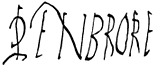
of a sharp eye, stern look.' He adds that Pembroke could neither read nor write, but documents with his signature in capital letters
are extant. The favourite 'cur-dog,' which appears in the Wilton picture,is said by Aubrey to have died on his hearse. Aubrey
declares that he was regarded by the Wiltshire gentry as an 'upstart,' and his retainers were constantly engaged in brawls with the
retainers of neighbouring noblemen. Lord Stourton and he were certainly on very bad terms.
Pembroke belonged to the new aristocracy, which the Tudor sovereigns created and encouraged, and his views in politics and religion
were largely moulded by his personal interests; but he was a brave soldier, and faithfully served those with whom he allied himself.
Of his buildings at Wilton the east front, much altered, alone survives, together with an elaborate porch, traditionally known as
Holbein's porch, and now standing by itself in the gardens of the house. The porch cannot be from the designs of Holbein, who died
in 1543 before Herbert was granted Wilton. A drawing of Wilton House, dated 1563, is engraved in Mr. Nightingale's 'Notices.'
Pembroke's first wife, Anne, was buried in St. Paul's Cathedral, 28 Feb. 1551. By her he had two sons, Henry, second earl, his heir,
and Edward, and a daughter Anne. The daughter married Francis, lord Talbot, son and heir of
George, sixth earl of Shrewsbury, in February 1562. At the same time, the bride's elder brother,
Henry, married the bridegroom's sister Catherine. Pembroke's second wife was Anne, sixth daughter of
George Talbot, fourth Earl of Shrewsbury, and widow of Peter Compton. By her he had no issue;
she was buried at Erith, Kent, on 8 Aug. 1588.
(Sidney Lee)
* [AJ NOTE:
£6,709, 19s in 1549 had roughly the same purchasing power as £3,294,000 in 2020!
Source: Measuring Worth]
Source:
Dictionary of National Biography. Vol XXVI. Sidney Lee, Ed.
London: Smith, Elder, & Co., 1891. 220-223.
Other Local Resources:
Web Links:
 | to Renaissance English Literature
|
|
| to Luminarium Encyclopedia |
Site ©1996-2023 Anniina Jokinen. All rights reserved.
This page was created on April 17, 2009. Last updated April 13, 2023.
|
Index of Encyclopedia Entries:
Medieval Cosmology
Prices of Items in Medieval England
Edward II
Isabella of France, Queen of England
Piers Gaveston
Thomas of Brotherton, E. of Norfolk
Edmund of Woodstock, E. of Kent
Thomas, Earl of Lancaster
Henry of Lancaster, Earl of Lancaster
Henry of Grosmont, Duke of Lancaster
Roger Mortimer, Earl of March
Hugh le Despenser the Younger
Bartholomew, Lord Burghersh, elder
Hundred Years' War (1337-1453)
Edward III
Philippa of Hainault, Queen of England
Edward, Black Prince of Wales
John of Eltham, Earl of Cornwall
The Battle of Crécy, 1346
The Siege of Calais, 1346-7
The Battle of Poitiers, 1356
Lionel of Antwerp, Duke of Clarence
John of Gaunt, Duke of Lancaster
Edmund of Langley, Duke of York
Thomas of Woodstock, Gloucester
Richard of York, E. of Cambridge
Richard Fitzalan, 3. Earl of Arundel
Roger Mortimer, 2nd Earl of March
The Good Parliament, 1376
Richard II
The Peasants' Revolt, 1381
Lords Appellant, 1388
Richard Fitzalan, 4. Earl of Arundel
Archbishop Thomas Arundel
Thomas de Beauchamp, E. Warwick
Robert de Vere, Earl of Oxford
Ralph Neville, E. of Westmorland
Thomas Mowbray, Duke of Norfolk
Edmund Mortimer, 3. Earl of March
Roger Mortimer, 4. Earl of March
John Holland, Duke of Exeter
Michael de la Pole, E. Suffolk
Hugh de Stafford, 2. E. Stafford
Henry IV
Edward, Duke of York
Edmund Mortimer, 5. Earl of March
Henry Percy, Earl of Northumberland
Sir Henry Percy, "Harry Hotspur"
Thomas Percy, Earl of Worcester
Owen Glendower
The Battle of Shrewsbury, 1403
Archbishop Richard Scrope
Thomas Mowbray, 3. E. Nottingham
John Mowbray, 2. Duke of Norfolk
Thomas Fitzalan, 5. Earl of Arundel
Henry V
Thomas, Duke of Clarence
John, Duke of Bedford
Humphrey, Duke of Gloucester
John Talbot, Earl of Shrewsbury
Richard, Earl of Cambridge
Henry, Baron Scrope of Masham
William de la Pole, Duke of Suffolk
Thomas Montacute, E. Salisbury
Richard Beauchamp, E. of Warwick
Henry Beauchamp, Duke of Warwick
Thomas Beaufort, Duke of Exeter
Cardinal Henry Beaufort
John Beaufort, Earl of Somerset
Sir John Fastolf
John Holland, 2. Duke of Exeter
Archbishop John Stafford
Archbishop John Kemp
Catherine of Valois
Owen Tudor
John Fitzalan, 7. Earl of Arundel
John, Lord Tiptoft
Charles VII, King of France
Joan of Arc
Louis XI, King of France
Charles the Bold, Duke of Burgundy
The Battle of Agincourt, 1415
The Battle of Castillon, 1453
The Wars of the Roses 1455-1485
Causes of the Wars of the Roses
The House of Lancaster
The House of York
The House of Beaufort
The House of Neville
The First Battle of St. Albans, 1455
The Battle of Blore Heath, 1459
The Rout of Ludford, 1459
The Battle of Northampton, 1460
The Battle of Wakefield, 1460
The Battle of Mortimer's Cross, 1461
The 2nd Battle of St. Albans, 1461
The Battle of Towton, 1461
The Battle of Hedgeley Moor, 1464
The Battle of Hexham, 1464
The Battle of Edgecote, 1469
The Battle of Losecoat Field, 1470
The Battle of Barnet, 1471
The Battle of Tewkesbury, 1471
The Treaty of Pecquigny, 1475
The Battle of Bosworth Field, 1485
The Battle of Stoke Field, 1487
Henry VI
Margaret of Anjou
Richard Plantagenet, Duke of York
Edward IV
Elizabeth Woodville
Richard Woodville, 1. Earl Rivers
Anthony Woodville, 2. Earl Rivers
Jane Shore
Edward V
Richard III
George, Duke of Clarence
Ralph Neville, 2. Earl of Westmorland
Richard Neville, Earl of Salisbury
Richard Neville, Earl of Warwick
Edward Neville, Baron Bergavenny
William Neville, Lord Fauconberg
Robert Neville, Bishop of Salisbury
John Neville, Marquis of Montagu
George Neville, Archbishop of York
John Beaufort, 1. Duke Somerset
Edmund Beaufort, 2. Duke Somerset
Henry Beaufort, 3. Duke of Somerset
Edmund Beaufort, 4. Duke Somerset
Margaret Beaufort
Edmund Tudor, Earl of Richmond
Jasper Tudor, Earl of Pembroke
Humphrey Stafford, D. Buckingham
Henry Stafford, Duke of Buckingham
Humphrey Stafford, E. of Devon
Thomas, Lord Stanley, Earl of Derby
Sir William Stanley
Archbishop Thomas Bourchier
Henry Bourchier, Earl of Essex
John Mowbray, 3. Duke of Norfolk
John Mowbray, 4. Duke of Norfolk
John Howard, Duke of Norfolk
Henry Percy, 2. E. Northumberland
Henry Percy, 3. E. Northumberland
Henry Percy, 4. E. Northumberland
William, Lord Hastings
Henry Holland, Duke of Exeter
William Fitzalan, Earl of Arundel
William Herbert, 1. Earl of Pembroke
John de Vere, 12th Earl of Oxford
John de Vere, 13th Earl of Oxford
Thomas de Clifford, 8. Baron Clifford
John de Clifford, 9. Baron Clifford
John Tiptoft, Earl of Worcester
Thomas Grey, 1. Marquis Dorset
Sir Andrew Trollop
Archbishop John Morton
Edward Plantagenet, E. of Warwick
John Talbot, 2. E. Shrewsbury
John Talbot, 3. E. Shrewsbury
John de la Pole, 2. Duke of Suffolk
John de la Pole, E. of Lincoln
Edmund de la Pole, E. of Suffolk
Richard de la Pole
John Sutton, Baron Dudley
James Butler, 5. Earl of Ormonde
Sir James Tyrell
Edmund Grey, first Earl of Kent
George Grey, 2nd Earl of Kent
John, 5th Baron Scrope of Bolton
James Touchet, 7th Baron Audley
Walter Blount, Lord Mountjoy
Robert Hungerford, Lord Moleyns
Thomas, Lord Scales
John, Lord Lovel and Holand
Francis Lovell, Viscount Lovell
Sir Richard Ratcliffe
William Catesby
Ralph, 4th Lord Cromwell
Jack Cade's Rebellion, 1450
Tudor Period
King Henry VII
Queen Elizabeth of York
Arthur, Prince of Wales
Lambert Simnel
Perkin Warbeck
The Battle of Blackheath, 1497
King Ferdinand II of Aragon
Queen Isabella of Castile
Maximilian I, Holy Roman Emperor
King Henry VIII
Queen Catherine of Aragon
Queen Anne Boleyn
Queen Jane Seymour
Queen Anne of Cleves
Queen Catherine Howard
Queen Katherine Parr
King Edward VI
Queen Mary I
Queen Elizabeth I
Henry Fitzroy, Duke of Richmond
Margaret Tudor, Queen of Scotland
James IV, King of Scotland
The Battle of Flodden Field, 1513
James V, King of Scotland
Mary of Guise, Queen of Scotland
Mary Tudor, Queen of France
Louis XII, King of France
Francis I, King of France
The Battle of the Spurs, 1513
Field of the Cloth of Gold, 1520
Charles V, Holy Roman Emperor
Eustace Chapuys, Imperial Ambassador
The Siege of Boulogne, 1544
Cardinal Thomas Wolsey
Archbishop Thomas Cranmer
Thomas Cromwell, Earl of Essex
Thomas, Lord Audley
Thomas Wriothesley, E. Southampton
Sir Richard Rich
Edward Stafford, D. of Buckingham
Thomas Howard, 2nd Duke of Norfolk
Thomas Howard, 3rd Duke of Norfolk
John Dudley, Duke of Northumberland
Charles Brandon, Duke of Suffolk
Thomas Boleyn, Earl of Wiltshire
George Boleyn, Viscount Rochford
John Russell, Earl of Bedford
Thomas Grey, 2. Marquis of Dorset
Henry Grey, D. of Suffolk
Charles Somerset, Earl of Worcester
George Talbot, 4. E. Shrewsbury
Francis Talbot, 5. E. Shrewsbury
Henry Algernon Percy,
5th Earl of Northumberland
Henry Algernon Percy,
6th Earl of Northumberland
Ralph Neville, 4. E. Westmorland
Henry Neville, 5. E. Westmorland
William Paulet, Marquis of Winchester
Sir Francis Bryan
Sir Nicholas Carew
John de Vere, 15th Earl of Oxford
John de Vere, 16th Earl of Oxford
Thomas Seymour, Lord Admiral
Edward Seymour, Protector Somerset
Margaret Pole, Countess of Salisbury
Henry Pole, Lord Montague
Sir Geoffrey Pole
Thomas Manners, Earl of Rutland
Henry Manners, Earl of Rutland
Henry Bourchier, 2. Earl of Essex
Robert Radcliffe, 1. Earl of Sussex
Henry Radcliffe, 2. Earl of Sussex
George Hastings, Earl of Huntingdon
Henry Courtenay, Marquis of Exeter
George Neville, Baron Bergavenny
Sir Edward Neville
William, Lord Paget
William Sandys, Baron Sandys
William Fitzwilliam, E. Southampton
Sir Anthony Browne
Sir Thomas Wriothesley
Sir William Kingston
George Brooke, Lord Cobham
Sir Richard Southwell
Thomas Fiennes, 9th Lord Dacre
Sir Francis Weston
Henry Norris
Lady Jane Grey
Sir Thomas Arundel
Sir Richard Sackville
Sir William Petre
Sir John Cheke
Walter Haddon, L.L.D
Sir Peter Carew
Sir John Mason
Nicholas Wotton
John Taylor
Sir Thomas Wyatt, the Younger
Cardinal Lorenzo Campeggio
Cardinal Reginald Pole
Stephen Gardiner, Bishop of Winchester
Edmund Bonner, Bishop of London
Nicholas Ridley, Bishop of London
John Hooper, Bishop of Gloucester
John Aylmer, Bishop of London
Thomas Linacre
William Grocyn
Archbishop William Warham
Cuthbert Tunstall, Bishop of Durham
Richard Fox, Bishop of Winchester
Edward Fox, Bishop of Hereford
Pope Julius II
Pope Leo X
Pope Clement VII
Pope Paul III
Pope Pius V
Pico della Mirandola
Desiderius Erasmus
Martin Bucer
Richard Pace
Christopher Saint-German
Thomas Tallis
Elizabeth Barton, the Nun of Kent
Hans Holbein, the Younger
The Sweating Sickness
Dissolution of the Monasteries
Pilgrimage of Grace, 1536
Robert Aske
Anne Askew
Lord Thomas Darcy
Sir Robert Constable
Oath of Supremacy
The Act of Supremacy, 1534
The First Act of Succession, 1534
The Third Act of Succession, 1544
The Ten Articles, 1536
The Six Articles, 1539
The Second Statute of Repeal, 1555
The Act of Supremacy, 1559
Articles Touching Preachers, 1583
Queen Elizabeth I
William Cecil, Lord Burghley
Robert Cecil, 1st Earl of Salisbury
Sir Francis Walsingham
Sir Nicholas Bacon
Sir Thomas Bromley
Robert Dudley, Earl of Leicester
Ambrose Dudley, Earl of Warwick
Henry Carey, Lord Hunsdon
Sir Thomas Egerton, Viscount Brackley
Sir Francis Knollys
Katherine "Kat" Ashley
Lettice Knollys, Countess of Leicester
George Talbot, 6. E. of Shrewsbury
Elizabeth, Countess of Shrewsbury
Gilbert Talbot, 7. E. of Shrewsbury
Sir Henry Sidney
Sir Robert Sidney
Archbishop Matthew Parker
Walter Devereux, 1st Earl of Essex
Robert Devereux, 2nd Earl of Essex
Penelope Devereux, Lady Rich
Sir Christopher Hatton
Edward Courtenay, E. Devonshire
Edward Manners, 3rd Earl of Rutland
Thomas Radcliffe, 3. Earl of Sussex
Henry Radcliffe, 4. Earl of Sussex
Robert Radcliffe, 5. Earl of Sussex
William Parr, Marquis of Northampton
Henry Wriothesley, 2. Southampton
Henry Wriothesley, 3. Southampton
Charles Neville, 6. E. Westmorland
Thomas Percy, 7. E. Northumberland
Henry Percy, 8. E. Northumberland
Henry Percy, 9. E. Nothumberland
William Herbert, 1. Earl of Pembroke
Charles, Lord Howard of Effingham
Thomas Howard, 4th Duke of Norfolk
Henry Howard, 1. Earl of Northampton
Thomas Howard, 1. Earl of Suffolk
Henry Hastings, 3. E. of Huntingdon
Edward Manners, 3rd Earl of Rutland
Roger Manners, 5th Earl of Rutland
Francis Manners, 6th Earl of Rutland
Henry FitzAlan, 12. Earl of Arundel
Thomas, Earl Arundell of Wardour
Edward Somerset, E. of Worcester
William Davison
Sir Walter Mildmay
Sir Ralph Sadler
Sir Amyas Paulet
Gilbert Gifford
Anthony Browne, Viscount Montague
François, Duke of Alençon & Anjou
Mary, Queen of Scots
Henry Stuart, Lord Darnley
James Hepburn, Earl of Bothwell
Anthony Babington and the Babington Plot
John Knox
Philip II of Spain
The Spanish Armada, 1588
Sir Francis Drake
Sir John Hawkins
William Camden
Archbishop Whitgift
Martin Marprelate Controversy
John Penry (Martin Marprelate)
Richard Bancroft, Archbishop of Canterbury
John Dee, Alchemist
Philip Henslowe
Edward Alleyn
The Blackfriars Theatre
The Fortune Theatre
The Rose Theatre
The Swan Theatre
Children's Companies
The Admiral's Men
The Lord Chamberlain's Men
Citizen Comedy
The Isle of Dogs, 1597
Common Law
Court of Common Pleas
Court of King's Bench
Court of Star Chamber
Council of the North
Fleet Prison
Assize
Attainder
First Fruits & Tenths
Livery and Maintenance
Oyer and terminer
Praemunire
The Stuarts
King James I of England
Anne of Denmark
Henry, Prince of Wales
The Gunpowder Plot, 1605
George Villiers, 1st Duke of Buckingham
Robert Carr, Earl of Somerset
Arabella Stuart, Lady Lennox
William Alabaster
Bishop Hall
Bishop Thomas Morton
Archbishop William Laud
John Selden
Lucy Harington, Countess of Bedford
Henry Lawes
King Charles I
Queen Henrietta Maria
Long Parliament
Rump Parliament
Kentish Petition, 1642
Thomas Wentworth, Earl of Strafford
John Digby, Earl of Bristol
George Digby, 2nd Earl of Bristol
Thomas Fairfax, 3rd Lord Fairfax
Robert Devereux, 3rd E. of Essex
Robert Sidney, 2. E. of Leicester
Algernon Percy, E. of Northumberland
Henry Montagu, Earl of Manchester
Edward Montagu, 2. Earl of Manchester
The Restoration
King Charles II
King James II
Test Acts
Greenwich Palace
Hatfield House
Richmond Palace
Windsor Palace
Woodstock Manor
The Cinque Ports
Mermaid Tavern
Malmsey Wine
Great Fire of London, 1666
Merchant Taylors' School
Westminster School
The Sanctuary at Westminster
"Sanctuary"
Images:
Chart of the English Succession from William I through Henry VII
Medieval English Drama
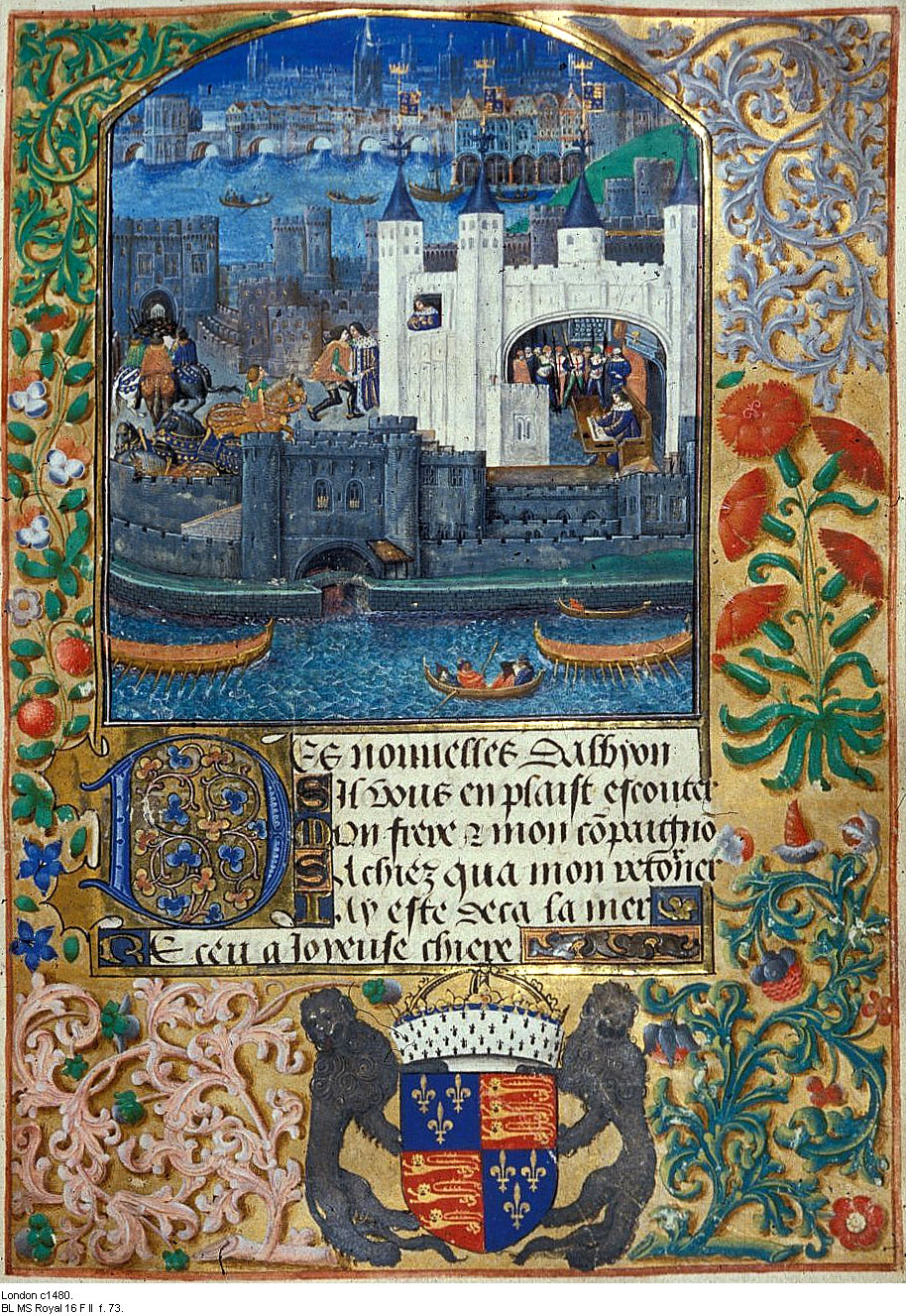
London c1480, MS Royal 16
London, 1510, the earliest view in print
Map of England from Saxton's Descriptio Angliae, 1579
London in late 16th century
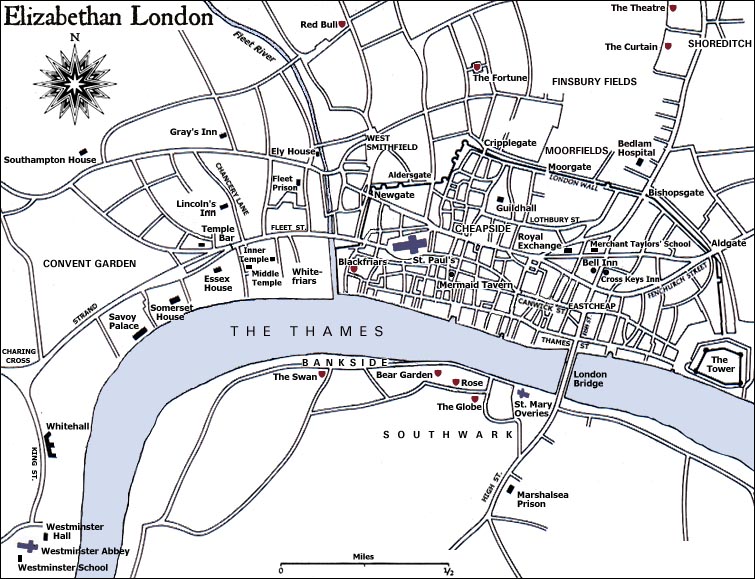
Location Map of Elizabethan London
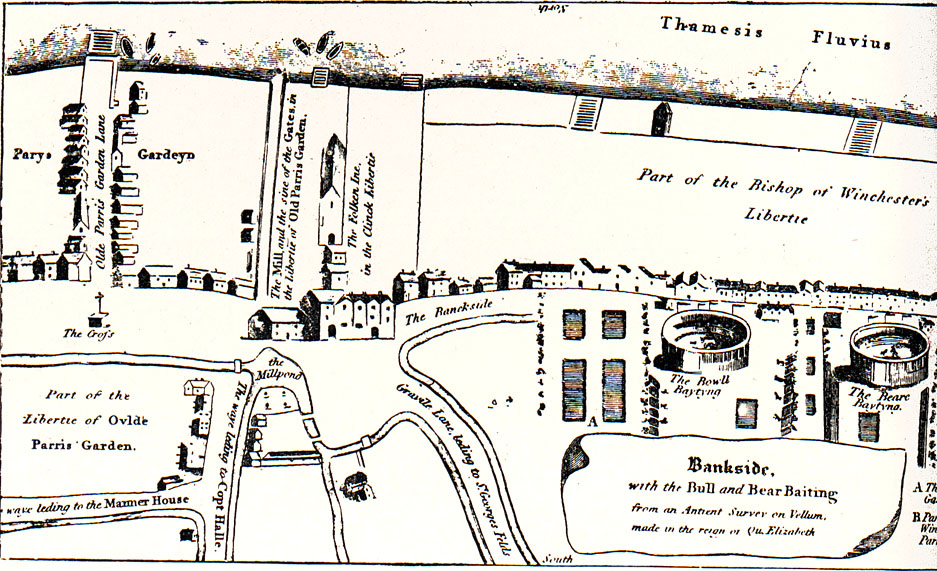
Plan of the Bankside, Southwark, in Shakespeare's time
Detail of Norden's Map of the Bankside, 1593
Bull and Bear Baiting Rings from the Agas Map (1569-1590, pub. 1631)
Sketch of the Swan Theatre, c. 1596
Westminster in the Seventeenth Century, by Hollar
Visscher's View of London, 1616
Larger Visscher's View in Sections
c. 1690. View of London Churches, after the Great Fire
The Yard of the Tabard Inn from Thornbury, Old and New London
|
|

 England under the Tudors