|
|
|
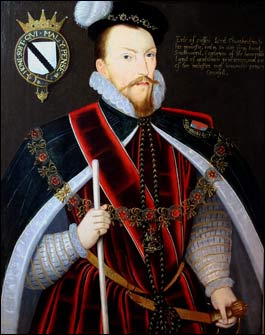
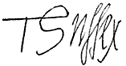

THOMAS RADCLYFFE,* third Earl of Sussex (c.1525-1583), lord-lieutenant of Ireland, eldest son of Henry, 2nd earl of Sussex,
by his first wife, Elizabeth, daughter of Thomas Howard, 2nd duke of Norfolk, was born about 1525, and after his father's succession
to the earldom in 1543 was styled Viscount Fitzwalter. After serving in the army abroad, he was employed in 1551 in negotiating a marriage between Edward VI
and a daughter of Henry II, king of France. His prominence in the kingdom was shown by his inclusion among the signatories to the letters patent of the 16th of June
1553 settling the crown on Lady Jane Grey; but he nevertheless won favour with Queen Mary, who employed
him in arranging her marriage with Philip of Spain, and who raised him to the peerage as Baron
Fitzwalter in August 1553.
Returning to England from a mission to the emperor Charles V in April 1556, Fitzwalter was
appointed lord deputy of Ireland. The prevailing anarchy in Ireland, a country which, nominally subject to the English Crown, was torn by feuds among its
practically independent native chieftains, rendered the task of the lord deputy one of no ordinary difficulty; a difficulty that was increased by the ignorance
of English statesmen concerning Ireland and Irish conditions, and by their incapacity to devise or to carry into execution any consistent and thoroughgoing
policy for bringing the half-conquered island under an orderly system of administration. The measures enjoined upon Fitzwalter by the government in London
comprised the reversal of the partial attempts that had been made during the short reign of Edward VI to promote Protestantism
in Ireland, and the "plantation" by English settlers of that part of the country then known as Offaly and Leix. But before Fitzwalter could give his attention
to such matters he found it necessary to make an expedition into Ulster, which was being kept in a constant state of disturbance by the Highland Scots from
Kintyre and the Islands who were making settlements along the Antrim coast in the district known as the Glynnes (glens), and by the efforts of Shane O'Neill
to convert into effective sovereignty the chieftainship of his clan which he had recently wrested from his father, Conn, 1st earl of Tyrone.
Having defeated O'Neill and his allies the MacDonnells, the lord deputy, who by the death of his father in February 1557 became earl of Sussex, returned to
Dublin, where he summoned a parliament in June of that year. Statutes were passed declaring the legitimacy of Queen Mary, reviving
the laws for the suppression of heresy, forbidding the immigration of Scots, and vesting in the Crown the territory comprised in what are now the King's County
and Queen's County, which were then so named after Philip and Mary respectively. Having carried this legislation, Sussex endeavoured to give forcible effect
to it, first by taking the field against Donough O'Conor, whom he failed to capture, and afterwards against Shane O'Neill, whose lands in Tyrone he ravaged,
restoring to their nominal rights the earl of Tyrone and his reputed son Matthew O'Neill, baron of Dungannon. In June of the following year Sussex turned his
attention to the west, where the head of the O'Briens had ousted his nephew Conor O'Brien, earl of Thomond, from his possessions, and refused to pay allegiance
to the Crown; he forced Limerick to open its gates to him, restored Thomond, and proclaimed The O'Brien a traitor. In the autumn of 1558 the continued inroads
of the Scottish islanders in the Antrim glens called for drastic treatment by the lord deputy. Sussex laid waste Kintyre and some of the southern Hebridean
isles, and landing at Carrickfergus he fired and plundered the settlements of the Scots on the Antrim coast before returning to Dublin for Christmas.
In the metropolis the news readied him of the queen's death. Crossing to England, he took part in the ceremonial of
Queen Elizabeth's coronation in January 1559; and in the following July he returned to Ireland with
a fresh commission, now as lord lieutenant, from the new queen, whose policy required him to come to terms if possible with the troublesome leaders of the
O'Neills and the MacDonnells. Shane O'Neill refused to meet Sussex without security for his safety, and having established his power in Ulster he demanded
terms of peace which Elizabeth was unwilling to grant. Sussex failed in his efforts to bring Shane to submission, either by open warfare or by a shameful
attempt to procure the Irish chieftain's assassination. He was preparing for a fresh attempt when he was superseded by the earl of Kildare, who was commissioned
by Elizabeth to open negotiations with O'Neill, the result of which was that the latter repaired to London and made formal submission to the queen. Shane's
conduct on his return to Ireland was no less rebellious than before, and energetic measures against him became more imperative than ever. Having obtained
Elizabeth's sanction, Sussex conducted a campaign in the summer of 1563 with Armagh as his temporary headquarters; but except for some indecisive skirmishing
and the seizure of many of O'Neill's cattle, the operations led to no result and left Shane O'Neill with his power little diminished. His continued failure to
effect a purpose for the accomplishment of which he possessed inadequate resources led Sussex to pray for his recall from Ireland; and his wish was granted in
May 1564.
His government of Ireland had not, however, been wholly without fruit. Sussex was the first representative of the English Crown who enforced authority to any
considerable extent beyond the limits of the Pale; the policy of planting English settlers in Offaly and Leix was carried out by him in 1562 with a certain
measure of success; and although he fell far short of establishing English rule throughout any large part of Ireland, he made its influence felt in remote
parts of the island, such as Thomond and the Glynnes of Antrim, where the independence of the native septs had hitherto been subjected not even to nominal
interference. His letters from Ireland display a just conception of the problems with which he was confronted, and of the methods by which their solution
should be undertaken; and his failure was due, not to lack of statesmanship or of executive capacity on his own part, but to the insufficiency of the resources
placed at his command and want of insight and persistence on the part of Elizabeth and her ministers.
On his return to England, Sussex, who before leaving Ireland had to endure the indignity of an inquiry into his administration instigated by his enemies, threw
himself into opposition to the earl of Leicester, especially in regard to the suggested
marriage between that nobleman and the queen. He does not appear to have on that account incurred Elizabeth's displeasure, for in 1566 and the following year
she employed him in negotiations for bringing about a different matrimonial alliance which he warmly supported, namely, the proposal that she should bestow her
hand on the archduke Charles. When this project fell to the ground Sussex returned from Vienna to London in March 1568, and in July he was appointed lord president
of the north, a position which threw on him the responsibility of dealing with the rebellion of the earls of Northumberland and
Westmorland in the following year. The weakness of the force at his disposal rendered necessary at the outset a caution which
engendered some suspicion of his loyalty; and this suspicion was increased by the counsel of moderation which he urged upon the queen; but in 1570 he laid waste
the border, invaded Scotland, and raided the country round Dumfries, reducing the rebel leaders to complete submission. In July 1572 Sussex became lord chamberlain,
and he was henceforth in frequent attendance on Queen Elizabeth, both in her progresses through the country and at court, until his death on the 9th. of June 1583.
The earl of Sussex was one of the great nobles of the Elizabethan period. Though his loyalty was questioned by his enemies, it was as unwavering as his patriotism.
He shone as a courtier; he excelled in diplomacy; he was a man of cultivation and even of scholarship, a patron of literature and of the drama on the eve of its
blossoming into the glory it became soon after his death. He was twice married: first to Elizabeth, daughter of
Thomas Wriothesley, earl of Southampton; and secondly to Frances, daughter of Sir William Sidney. His second wife was the foundress
of Sidney Sussex College at Cambridge, which she endowed by her will, and whose name commemorates the father and the husband of the countess. The earl left no
children, and at his death his titles passed to his brother Henry.
[AJ Note:
* Variously also Radcliffe, Ratclyffe, Ratcliffe.]
Source:
McNeill, Ronald John. "Thomas Radclyffe, Third Earl of Sussex."
Encyclopedia Britannica, 11th Ed. Vol XXVI.
Cambridge: Cambridge University Press, 1911. 164-5.
Other Local Resources:
Web Links:
 | to Renaissance English Literature
|
|
| to Luminarium Encyclopedia |
Site ©1996-2023 Anniina Jokinen. All rights reserved.
This page was created on April 15, 2009. Last updated February 27, 2023.
|
Index of Encyclopedia Entries:
Medieval Cosmology
Prices of Items in Medieval England
Edward II
Isabella of France, Queen of England
Piers Gaveston
Thomas of Brotherton, E. of Norfolk
Edmund of Woodstock, E. of Kent
Thomas, Earl of Lancaster
Henry of Lancaster, Earl of Lancaster
Henry of Grosmont, Duke of Lancaster
Roger Mortimer, Earl of March
Hugh le Despenser the Younger
Bartholomew, Lord Burghersh, elder
Hundred Years' War (1337-1453)
Edward III
Philippa of Hainault, Queen of England
Edward, Black Prince of Wales
John of Eltham, Earl of Cornwall
The Battle of Crécy, 1346
The Siege of Calais, 1346-7
The Battle of Poitiers, 1356
Lionel of Antwerp, Duke of Clarence
John of Gaunt, Duke of Lancaster
Edmund of Langley, Duke of York
Thomas of Woodstock, Gloucester
Richard of York, E. of Cambridge
Richard Fitzalan, 3. Earl of Arundel
Roger Mortimer, 2nd Earl of March
The Good Parliament, 1376
Richard II
The Peasants' Revolt, 1381
Lords Appellant, 1388
Richard Fitzalan, 4. Earl of Arundel
Archbishop Thomas Arundel
Thomas de Beauchamp, E. Warwick
Robert de Vere, Earl of Oxford
Ralph Neville, E. of Westmorland
Thomas Mowbray, Duke of Norfolk
Edmund Mortimer, 3. Earl of March
Roger Mortimer, 4. Earl of March
John Holland, Duke of Exeter
Michael de la Pole, E. Suffolk
Hugh de Stafford, 2. E. Stafford
Henry IV
Edward, Duke of York
Edmund Mortimer, 5. Earl of March
Henry Percy, Earl of Northumberland
Sir Henry Percy, "Harry Hotspur"
Thomas Percy, Earl of Worcester
Owen Glendower
The Battle of Shrewsbury, 1403
Archbishop Richard Scrope
Thomas Mowbray, 3. E. Nottingham
John Mowbray, 2. Duke of Norfolk
Thomas Fitzalan, 5. Earl of Arundel
Henry V
Thomas, Duke of Clarence
John, Duke of Bedford
Humphrey, Duke of Gloucester
John Talbot, Earl of Shrewsbury
Richard, Earl of Cambridge
Henry, Baron Scrope of Masham
William de la Pole, Duke of Suffolk
Thomas Montacute, E. Salisbury
Richard Beauchamp, E. of Warwick
Henry Beauchamp, Duke of Warwick
Thomas Beaufort, Duke of Exeter
Cardinal Henry Beaufort
John Beaufort, Earl of Somerset
Sir John Fastolf
John Holland, 2. Duke of Exeter
Archbishop John Stafford
Archbishop John Kemp
Catherine of Valois
Owen Tudor
John Fitzalan, 7. Earl of Arundel
John, Lord Tiptoft
Charles VII, King of France
Joan of Arc
Louis XI, King of France
Charles the Bold, Duke of Burgundy
The Battle of Agincourt, 1415
The Battle of Castillon, 1453
The Wars of the Roses 1455-1485
Causes of the Wars of the Roses
The House of Lancaster
The House of York
The House of Beaufort
The House of Neville
The First Battle of St. Albans, 1455
The Battle of Blore Heath, 1459
The Rout of Ludford, 1459
The Battle of Northampton, 1460
The Battle of Wakefield, 1460
The Battle of Mortimer's Cross, 1461
The 2nd Battle of St. Albans, 1461
The Battle of Towton, 1461
The Battle of Hedgeley Moor, 1464
The Battle of Hexham, 1464
The Battle of Edgecote, 1469
The Battle of Losecoat Field, 1470
The Battle of Barnet, 1471
The Battle of Tewkesbury, 1471
The Treaty of Pecquigny, 1475
The Battle of Bosworth Field, 1485
The Battle of Stoke Field, 1487
Henry VI
Margaret of Anjou
Richard Plantagenet, Duke of York
Edward IV
Elizabeth Woodville
Richard Woodville, 1. Earl Rivers
Anthony Woodville, 2. Earl Rivers
Jane Shore
Edward V
Richard III
George, Duke of Clarence
Ralph Neville, 2. Earl of Westmorland
Richard Neville, Earl of Salisbury
Richard Neville, Earl of Warwick
Edward Neville, Baron Bergavenny
William Neville, Lord Fauconberg
Robert Neville, Bishop of Salisbury
John Neville, Marquis of Montagu
George Neville, Archbishop of York
John Beaufort, 1. Duke Somerset
Edmund Beaufort, 2. Duke Somerset
Henry Beaufort, 3. Duke of Somerset
Edmund Beaufort, 4. Duke Somerset
Margaret Beaufort
Edmund Tudor, Earl of Richmond
Jasper Tudor, Earl of Pembroke
Humphrey Stafford, D. Buckingham
Henry Stafford, Duke of Buckingham
Humphrey Stafford, E. of Devon
Thomas, Lord Stanley, Earl of Derby
Sir William Stanley
Archbishop Thomas Bourchier
Henry Bourchier, Earl of Essex
John Mowbray, 3. Duke of Norfolk
John Mowbray, 4. Duke of Norfolk
John Howard, Duke of Norfolk
Henry Percy, 2. E. Northumberland
Henry Percy, 3. E. Northumberland
Henry Percy, 4. E. Northumberland
William, Lord Hastings
Henry Holland, Duke of Exeter
William Fitzalan, Earl of Arundel
William Herbert, 1. Earl of Pembroke
John de Vere, 12th Earl of Oxford
John de Vere, 13th Earl of Oxford
Thomas de Clifford, 8. Baron Clifford
John de Clifford, 9. Baron Clifford
John Tiptoft, Earl of Worcester
Thomas Grey, 1. Marquis Dorset
Sir Andrew Trollop
Archbishop John Morton
Edward Plantagenet, E. of Warwick
John Talbot, 2. E. Shrewsbury
John Talbot, 3. E. Shrewsbury
John de la Pole, 2. Duke of Suffolk
John de la Pole, E. of Lincoln
Edmund de la Pole, E. of Suffolk
Richard de la Pole
John Sutton, Baron Dudley
James Butler, 5. Earl of Ormonde
Sir James Tyrell
Edmund Grey, first Earl of Kent
George Grey, 2nd Earl of Kent
John, 5th Baron Scrope of Bolton
James Touchet, 7th Baron Audley
Walter Blount, Lord Mountjoy
Robert Hungerford, Lord Moleyns
Thomas, Lord Scales
John, Lord Lovel and Holand
Francis Lovell, Viscount Lovell
Sir Richard Ratcliffe
William Catesby
Ralph, 4th Lord Cromwell
Jack Cade's Rebellion, 1450
Tudor Period
King Henry VII
Queen Elizabeth of York
Arthur, Prince of Wales
Lambert Simnel
Perkin Warbeck
The Battle of Blackheath, 1497
King Ferdinand II of Aragon
Queen Isabella of Castile
Maximilian I, Holy Roman Emperor
King Henry VIII
Queen Catherine of Aragon
Queen Anne Boleyn
Queen Jane Seymour
Queen Anne of Cleves
Queen Catherine Howard
Queen Katherine Parr
King Edward VI
Queen Mary I
Queen Elizabeth I
Henry Fitzroy, Duke of Richmond
Margaret Tudor, Queen of Scotland
James IV, King of Scotland
The Battle of Flodden Field, 1513
James V, King of Scotland
Mary of Guise, Queen of Scotland
Mary Tudor, Queen of France
Louis XII, King of France
Francis I, King of France
The Battle of the Spurs, 1513
Field of the Cloth of Gold, 1520
Charles V, Holy Roman Emperor
Eustace Chapuys, Imperial Ambassador
The Siege of Boulogne, 1544
Cardinal Thomas Wolsey
Archbishop Thomas Cranmer
Thomas Cromwell, Earl of Essex
Thomas, Lord Audley
Thomas Wriothesley, E. Southampton
Sir Richard Rich
Edward Stafford, D. of Buckingham
Thomas Howard, 2nd Duke of Norfolk
Thomas Howard, 3rd Duke of Norfolk
John Dudley, Duke of Northumberland
Charles Brandon, Duke of Suffolk
Thomas Boleyn, Earl of Wiltshire
George Boleyn, Viscount Rochford
John Russell, Earl of Bedford
Thomas Grey, 2. Marquis of Dorset
Henry Grey, D. of Suffolk
Charles Somerset, Earl of Worcester
George Talbot, 4. E. Shrewsbury
Francis Talbot, 5. E. Shrewsbury
Henry Algernon Percy,
5th Earl of Northumberland
Henry Algernon Percy,
6th Earl of Northumberland
Ralph Neville, 4. E. Westmorland
Henry Neville, 5. E. Westmorland
William Paulet, Marquis of Winchester
Sir Francis Bryan
Sir Nicholas Carew
John de Vere, 15th Earl of Oxford
John de Vere, 16th Earl of Oxford
Thomas Seymour, Lord Admiral
Edward Seymour, Protector Somerset
Margaret Pole, Countess of Salisbury
Henry Pole, Lord Montague
Sir Geoffrey Pole
Thomas Manners, Earl of Rutland
Henry Manners, Earl of Rutland
Henry Bourchier, 2. Earl of Essex
Robert Radcliffe, 1. Earl of Sussex
Henry Radcliffe, 2. Earl of Sussex
George Hastings, Earl of Huntingdon
Henry Courtenay, Marquis of Exeter
George Neville, Baron Bergavenny
Sir Edward Neville
William, Lord Paget
William Sandys, Baron Sandys
William Fitzwilliam, E. Southampton
Sir Anthony Browne
Sir Thomas Wriothesley
Sir William Kingston
George Brooke, Lord Cobham
Sir Richard Southwell
Thomas Fiennes, 9th Lord Dacre
Sir Francis Weston
Henry Norris
Lady Jane Grey
Sir Thomas Arundel
Sir Richard Sackville
Sir William Petre
Sir John Cheke
Walter Haddon, L.L.D
Sir Peter Carew
Sir John Mason
Nicholas Wotton
John Taylor
Sir Thomas Wyatt, the Younger
Cardinal Lorenzo Campeggio
Cardinal Reginald Pole
Stephen Gardiner, Bishop of Winchester
Edmund Bonner, Bishop of London
Nicholas Ridley, Bishop of London
John Hooper, Bishop of Gloucester
John Aylmer, Bishop of London
Thomas Linacre
William Grocyn
Archbishop William Warham
Cuthbert Tunstall, Bishop of Durham
Richard Fox, Bishop of Winchester
Edward Fox, Bishop of Hereford
Pope Julius II
Pope Leo X
Pope Clement VII
Pope Paul III
Pope Pius V
Pico della Mirandola
Desiderius Erasmus
Martin Bucer
Richard Pace
Christopher Saint-German
Thomas Tallis
Elizabeth Barton, the Nun of Kent
Hans Holbein, the Younger
The Sweating Sickness
Dissolution of the Monasteries
Pilgrimage of Grace, 1536
Robert Aske
Anne Askew
Lord Thomas Darcy
Sir Robert Constable
Oath of Supremacy
The Act of Supremacy, 1534
The First Act of Succession, 1534
The Third Act of Succession, 1544
The Ten Articles, 1536
The Six Articles, 1539
The Second Statute of Repeal, 1555
The Act of Supremacy, 1559
Articles Touching Preachers, 1583
Queen Elizabeth I
William Cecil, Lord Burghley
Robert Cecil, 1st Earl of Salisbury
Sir Francis Walsingham
Sir Nicholas Bacon
Sir Thomas Bromley
Robert Dudley, Earl of Leicester
Ambrose Dudley, Earl of Warwick
Henry Carey, Lord Hunsdon
Sir Thomas Egerton, Viscount Brackley
Sir Francis Knollys
Katherine "Kat" Ashley
Lettice Knollys, Countess of Leicester
George Talbot, 6. E. of Shrewsbury
Elizabeth, Countess of Shrewsbury
Gilbert Talbot, 7. E. of Shrewsbury
Sir Henry Sidney
Sir Robert Sidney
Archbishop Matthew Parker
Walter Devereux, 1st Earl of Essex
Robert Devereux, 2nd Earl of Essex
Penelope Devereux, Lady Rich
Sir Christopher Hatton
Edward Courtenay, E. Devonshire
Edward Manners, 3rd Earl of Rutland
Thomas Radcliffe, 3. Earl of Sussex
Henry Radcliffe, 4. Earl of Sussex
Robert Radcliffe, 5. Earl of Sussex
William Parr, Marquis of Northampton
Henry Wriothesley, 2. Southampton
Henry Wriothesley, 3. Southampton
Charles Neville, 6. E. Westmorland
Thomas Percy, 7. E. Northumberland
Henry Percy, 8. E. Northumberland
Henry Percy, 9. E. Nothumberland
William Herbert, 1. Earl of Pembroke
Charles, Lord Howard of Effingham
Thomas Howard, 4th Duke of Norfolk
Henry Howard, 1. Earl of Northampton
Thomas Howard, 1. Earl of Suffolk
Henry Hastings, 3. E. of Huntingdon
Edward Manners, 3rd Earl of Rutland
Roger Manners, 5th Earl of Rutland
Francis Manners, 6th Earl of Rutland
Henry FitzAlan, 12. Earl of Arundel
Thomas, Earl Arundell of Wardour
Edward Somerset, E. of Worcester
William Davison
Sir Walter Mildmay
Sir Ralph Sadler
Sir Amyas Paulet
Gilbert Gifford
Anthony Browne, Viscount Montague
François, Duke of Alençon & Anjou
Mary, Queen of Scots
Henry Stuart, Lord Darnley
James Hepburn, Earl of Bothwell
Anthony Babington and the Babington Plot
John Knox
Philip II of Spain
The Spanish Armada, 1588
Sir Francis Drake
Sir John Hawkins
William Camden
Archbishop Whitgift
Martin Marprelate Controversy
John Penry (Martin Marprelate)
Richard Bancroft, Archbishop of Canterbury
John Dee, Alchemist
Philip Henslowe
Edward Alleyn
The Blackfriars Theatre
The Fortune Theatre
The Rose Theatre
The Swan Theatre
Children's Companies
The Admiral's Men
The Lord Chamberlain's Men
Citizen Comedy
The Isle of Dogs, 1597
Common Law
Court of Common Pleas
Court of King's Bench
Court of Star Chamber
Council of the North
Fleet Prison
Assize
Attainder
First Fruits & Tenths
Livery and Maintenance
Oyer and terminer
Praemunire
The Stuarts
King James I of England
Anne of Denmark
Henry, Prince of Wales
The Gunpowder Plot, 1605
George Villiers, 1st Duke of Buckingham
Robert Carr, Earl of Somerset
Arabella Stuart, Lady Lennox
William Alabaster
Bishop Hall
Bishop Thomas Morton
Archbishop William Laud
John Selden
Lucy Harington, Countess of Bedford
Henry Lawes
King Charles I
Queen Henrietta Maria
Long Parliament
Rump Parliament
Kentish Petition, 1642
Thomas Wentworth, Earl of Strafford
John Digby, Earl of Bristol
George Digby, 2nd Earl of Bristol
Thomas Fairfax, 3rd Lord Fairfax
Robert Devereux, 3rd E. of Essex
Robert Sidney, 2. E. of Leicester
Algernon Percy, E. of Northumberland
Henry Montagu, Earl of Manchester
Edward Montagu, 2. Earl of Manchester
The Restoration
King Charles II
King James II
Test Acts
Greenwich Palace
Hatfield House
Richmond Palace
Windsor Palace
Woodstock Manor
The Cinque Ports
Mermaid Tavern
Malmsey Wine
Great Fire of London, 1666
Merchant Taylors' School
Westminster School
The Sanctuary at Westminster
"Sanctuary"
Images:
Chart of the English Succession from William I through Henry VII
Medieval English Drama
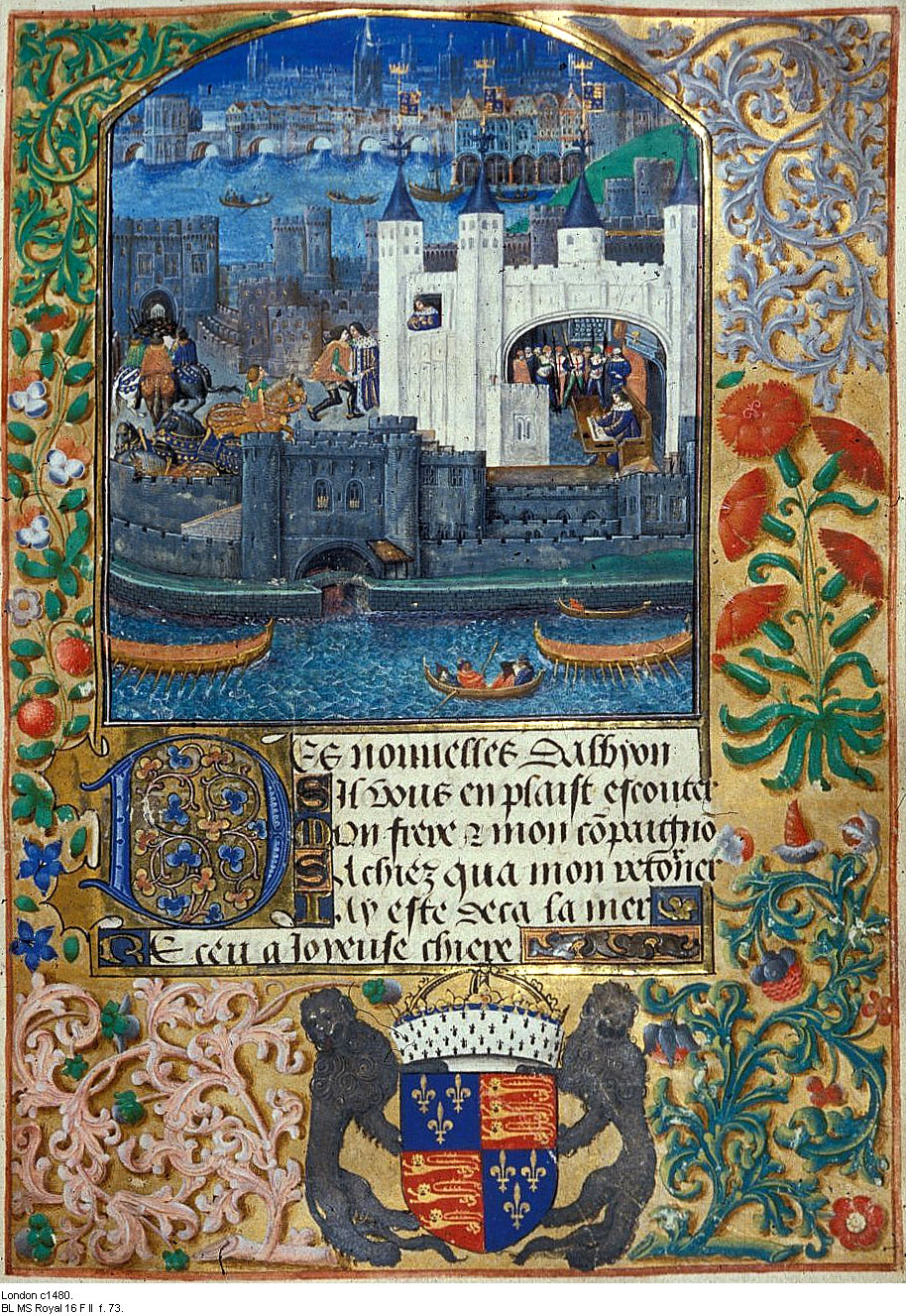
London c1480, MS Royal 16
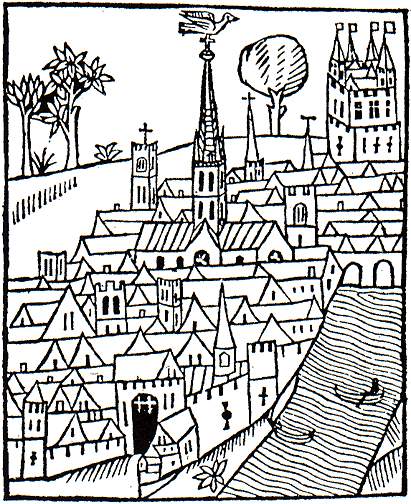
London, 1510, the earliest view in print
Map of England from Saxton's Descriptio Angliae, 1579
London in late 16th century
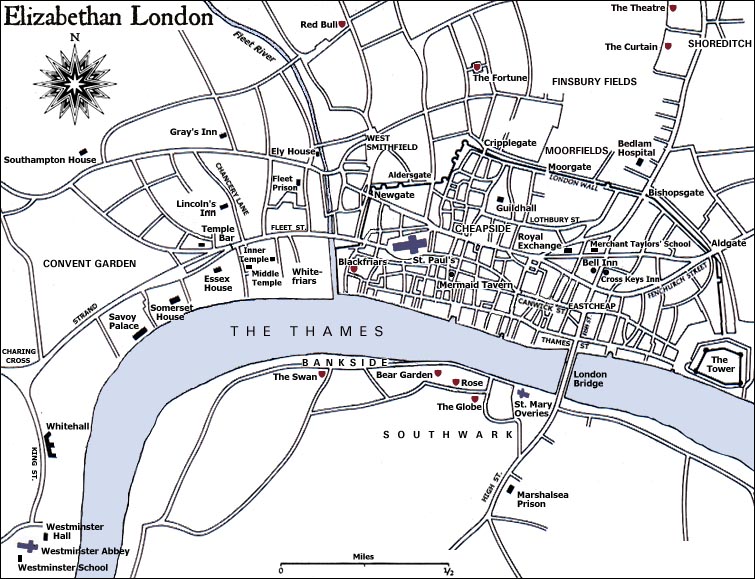
Location Map of Elizabethan London
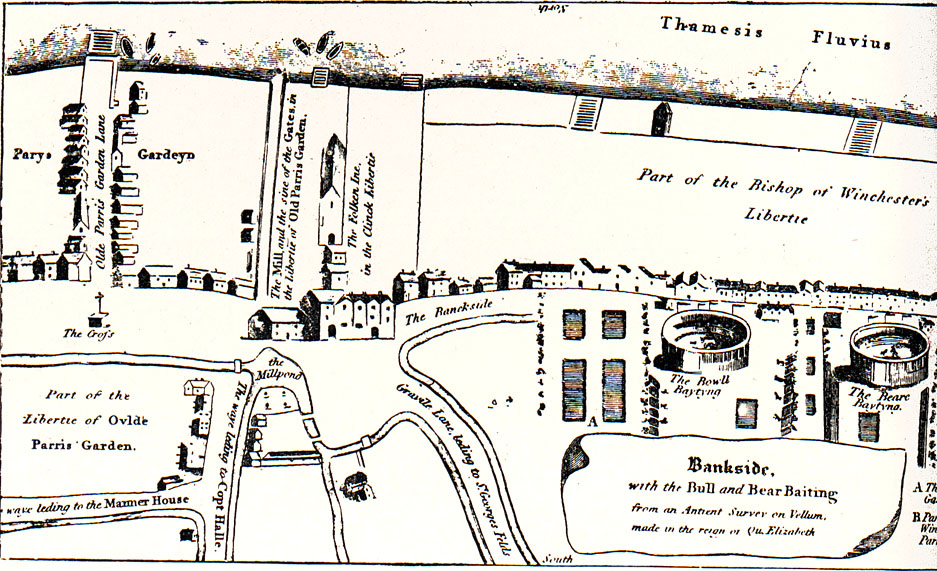
Plan of the Bankside, Southwark, in Shakespeare's time
Detail of Norden's Map of the Bankside, 1593
Bull and Bear Baiting Rings from the Agas Map (1569-1590, pub. 1631)
Sketch of the Swan Theatre, c. 1596
Westminster in the Seventeenth Century, by Hollar
Visscher's View of London, 1616
Larger Visscher's View in Sections
c. 1690. View of London Churches, after the Great Fire
The Yard of the Tabard Inn from Thornbury, Old and New London
|
|